
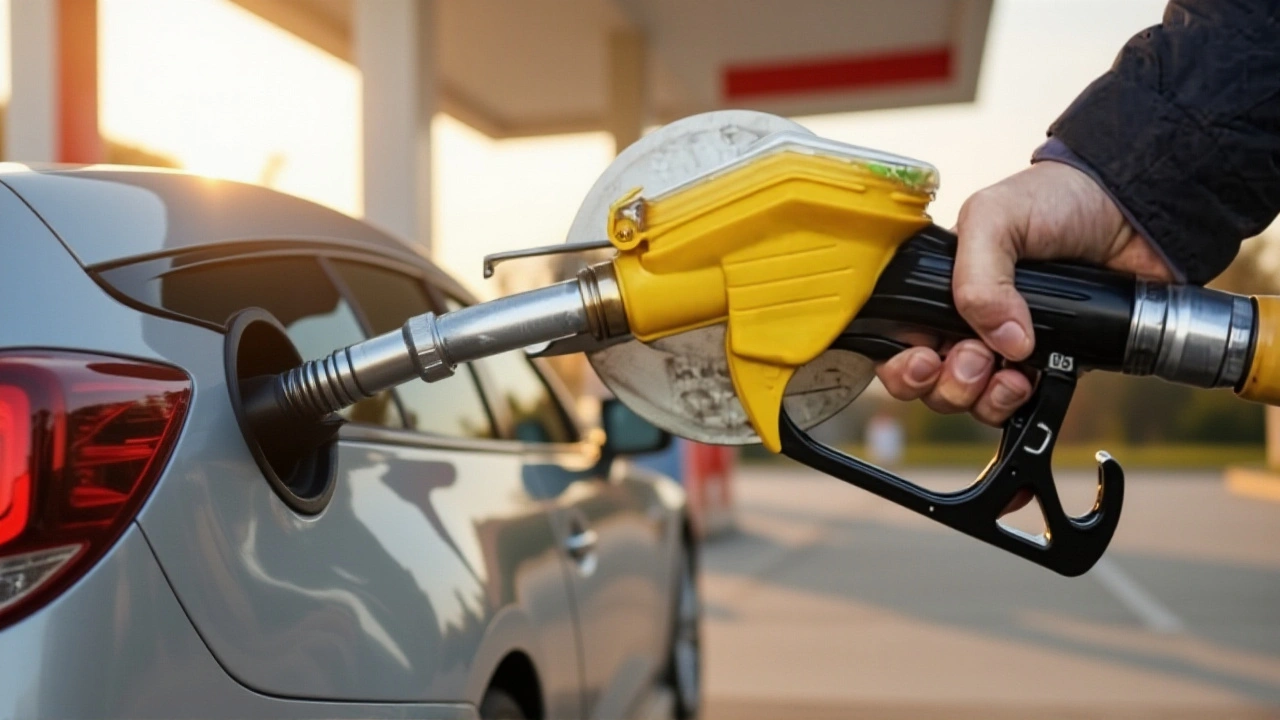
On November 28, 2025, the Nigerian National Petroleum Company Limited (NNPC) slashed petrol prices to N900 per litre in Lagos and N940 per litre in Abuja — a move that sent ripples through Nigeria’s fuel market, marking the second price drop in under two weeks. The reduction, confirmed by on-the-ground checks from TheCable.ng at stations like Apple Junction in Lagos and Lugbe Airport Road in Abuja, came as a direct response to aggressive pricing by the Dangote Refinery, which had stunned the industry by dropping its ex-gantry price to N828 per litre on November 7, 2025. For the first time in years, private refiners aren’t just competitors — they’re price setters.
The Domino Effect: How Dangote Forced NNPC’s Hand
It wasn’t just Dangote. The refinery’s move triggered a cascade. By November 25, depots like AIPEC, NIPCO Lagos, and Aiteo had all cut their ex-depot prices to N840 per litre. Even smaller players like Rainoil and Pinnacle Oil followed, dropping to N844 and N842 respectively. The numbers don’t lie: the landing cost of petrol, according to Petroleumprice.ng and Major Energy Marketers Association of Nigeria (MEMAN), had fallen to N827.04 per litre by November 3 — nearly N50 below Dangote’s own ex-depot rate of N872. That gap? It’s the death knell for old pricing models.NNPC, long the price anchor, had no choice. By November 28, its Abuja price had dropped from N945 to N940. In Lagos, it fell from N910 to N900 — a rare moment when the state-owned giant wasn’t leading the market, but chasing it.
Private Marketers Join the Fray
Independent marketers didn’t wait for NNPC to blink. Ardova, MRS, and Ranoil all rolled out prices between N900 and N935 across their networks. At some Lagos stations, you could buy petrol for as little as N895 — a price that would’ve been unthinkable six months ago. But here’s the twist: not everyone followed. Some MRS and Ranoil stations in Abuja held firm at N950 as late as November 6, according to Nigerian Newssphere. That inconsistency? It’s not chaos. It’s strategy. Some marketers are testing how far they can stretch margins before the market forces them down.What’s more, the Nigerian Midstream and Downstream Petroleum Regulatory Authority (NMDPRA) quietly reversed President Bola Ahmed Tinubu’s October 21, 2025 decision to impose a 15% import duty on petrol and diesel. By November 13, they announced the policy was “no longer in view.” That wasn’t just a technical adjustment — it was a surrender. The government had hoped the duty would protect Dangote by making imports more expensive. Instead, it accelerated the collapse of the old system. Now, imported fuel is cheaper than ever. And Dangote? It’s not just selling fuel. It’s rewriting the rules.
Why This Matters More Than Just Lower Prices
This isn’t just about filling up your tank cheaper. It’s about power shifting. For decades, NNPC controlled the price, the supply, and the narrative. Now, private players are dictating terms. The Independent Petroleum Marketers Association of Nigeria (IPMAN) is already warning of more cuts. “The petrol price war is intensifying,” an IPMAN official told Nigerian Bulletin on November 28. “We’re not seeing a correction. We’re seeing a revolution.”And the ripple effects are spreading. Oil importers are scrambling. Local distributors are renegotiating contracts. Even the Naira is feeling the pressure — with less demand for foreign exchange to import fuel, the currency could stabilize. Analysts say if Dangote’s output continues to climb — and it’s now producing over 650,000 barrels per day — prices could dip below N850 in Lagos by January.
What’s Next? The Race to the Bottom
The question isn’t whether prices will fall further — it’s how fast. With Dangote’s refining capacity still ramping up, and importers now free from the 15% duty, the market is wide open. NNPC’s next move? Likely another cut, possibly as early as December 5. Independent marketers are already preparing for N880 in Lagos. And if the Central Bank of Nigeria continues to ease forex restrictions on fuel imports, we could see N850 become the new floor.But here’s the real concern: will this last? Or is this a temporary glut? Some worry that if global crude prices spike or Dangote faces maintenance delays, prices could rebound sharply. Others point to the new reality: Nigeria’s fuel market is now competitive, transparent, and consumer-driven. That’s a change worth celebrating — even if it’s messy.
Background: The Long Road to This Moment
The roots of this shift go back to 2023, when Dangote Refinery began test runs. For months, the government resisted, clinging to old subsidies and import controls. Then came the May 2024 fuel subsidy removal — a move that was supposed to stabilize prices. Instead, it created a vacuum. By October 2025, Nigeria was importing over 40% of its petrol, despite having Africa’s largest refinery just 40 kilometers from Lagos. The 15% import duty was the last gasp of the old regime. And now? It’s dead.Even the timing of NNPC’s price cuts is telling. The first reduction on November 27, 2025, was barely noticed. The second, on November 28, made headlines. Why? Because by then, the market had spoken. And NNPC listened.
Frequently Asked Questions
How does this affect everyday Nigerians?
For the average Nigerian, petrol prices dropping from N950 to N900 means saving about N1,200 per month if you fill up twice weekly — that’s nearly 10% of the minimum wage in Lagos. Transport costs for buses and commercial drivers are falling too, which could lower the price of goods nationwide. But the real win? Predictability. For the first time, prices are being set by market forces, not bureaucracy.
Why did NMDPRA drop the 15% import duty?
The duty was meant to protect Dangote Refinery by making imported fuel more expensive. But it backfired: importers flooded the market with cheaper fuel before the duty took effect, and Dangote’s ex-gantry price was already lower than the landed cost of imports. With prices collapsing anyway, the government had no choice but to scrap the policy to avoid public backlash and legal challenges over arbitrary taxation.
Are other refineries in Nigeria capable of competing?
Currently, no. The Dangote Refinery produces over 650,000 barrels per day — more than all other Nigerian refineries combined. The Port Harcourt and Kaduna refineries are still operating at less than 30% capacity due to chronic underinvestment. Until those facilities are fully rehabilitated — a process that could take years — Dangote remains the only viable domestic alternative to imports.
Could this lead to job losses in the fuel import sector?
Yes. Over 12,000 people work in fuel import logistics, storage, and distribution across Nigeria. As demand for imported petrol falls, many of these roles — especially in ports and border depots — are at risk. The government has not yet announced a transition plan, but industry insiders say retraining programs for depot workers to become Dangote distributors could be the only viable path forward.
What’s the long-term impact on Nigeria’s economy?
Lower fuel prices mean lower transportation and production costs across every sector — from agriculture to manufacturing. Analysts estimate Nigeria could save $2.3 billion annually on fuel imports if domestic production replaces 70% of imports. That’s money that could be reinvested in infrastructure, power, or education. But it also means reduced forex pressure — and a stronger Naira. The real win? A market that works for consumers, not just monopolies.
Will petrol prices stay low after the holiday season?
It depends on Dangote’s output and global crude prices. If the refinery maintains its current production rate and crude stays under $75/barrel, prices could hold below N900 into 2026. But if global markets spike or Dangote faces maintenance issues, we could see a 5–10% rebound. Still, even a return to N920 would be cheaper than pre-Dangote prices — and the market is now too competitive for a full return to the old system.





Narinder K
November 30, 2025 AT 12:48Narayana Murthy Dasara
December 1, 2025 AT 22:13lakshmi shyam
December 3, 2025 AT 10:59Sabir Malik
December 3, 2025 AT 19:19Debsmita Santra
December 4, 2025 AT 15:40Vasudha Kamra
December 4, 2025 AT 19:22Abhinav Rawat
December 6, 2025 AT 10:08Shashi Singh
December 8, 2025 AT 02:28Surbhi Kanda
December 9, 2025 AT 22:41Sandhiya Ravi
December 11, 2025 AT 15:33JAYESH KOTADIYA
December 12, 2025 AT 22:56Vikash Kumar
December 13, 2025 AT 00:06Siddharth Gupta
December 13, 2025 AT 14:37Anoop Singh
December 13, 2025 AT 18:10Omkar Salunkhe
December 13, 2025 AT 22:06raja kumar
December 14, 2025 AT 19:43