
Injury Crisis: How Team Rosters Bend Under Pressure and What It Means for African Sports
When a team faces an injury crisis, a sudden cluster of player injuries that disrupts normal team operations. Also known as medical overload, it’s when a club or national side loses too many key players at once—midfielders, defenders, goalkeepers—and has to scramble just to field a full side. This isn’t just bad luck. It’s a test of depth, preparation, and how well a team manages its human resources. In African football, where medical infrastructure is often stretched thin and squad sizes are smaller, an injury crisis can mean the difference between qualifying for a World Cup or going home early. Look at Bafana Bafana’s recent qualifiers—when their top two strikers went down, coach Hugo Broos had to reshuffle the entire attack. That’s not an anomaly. It’s the norm in leagues where backup players rarely get proper training time.
What makes an injury crisis, a sudden cluster of player injuries that disrupts normal team operations. Also known as medical overload, it’s when a club or national side loses too many key players at once—and has to scramble just to field a full side. so dangerous isn’t just the number of players out, but the team depth, the quality and availability of substitute players ready to step into starting roles. Also known as squad rotation capacity, it’s what separates a team that survives from one that collapses. Take Lazio’s 2025 match against Cagliari. They started Serie A’s oldest XI ever—not because they wanted to, but because younger players were sidelined. That’s not a tactical masterstroke. That’s a symptom of an athlete recovery, the process and timeline for an injured player to return to full fitness and match readiness. Also known as return-to-play protocol, it’s what determines how quickly a team can bounce back after losses. system failing. When players like Mats Hummels play their likely farewell match while still recovering from nagging issues, it shows the system is prioritizing short-term results over long-term health. In Africa, where sports science is often underfunded, these decisions happen daily. A midfielder in Kampala or Lagos might miss two weeks of training after a minor strain because there’s no physio on staff. By the time he returns, the team’s momentum is gone.
It’s not just football. Look at the kitesurfer killed by a whale in Bloubergstrand—sudden, unpredictable trauma. Or the rise in synthetic drug deaths in Kenya, where athletes are being pushed beyond limits with no proper monitoring. An injury crisis isn’t just about broken bones or pulled muscles. It’s about systems that don’t protect people. Whether it’s a Premier League club or a rural African team playing on a dusty pitch, the same question remains: Who’s looking out for the players when things go wrong? Below, you’ll find real stories of teams forced to rebuild mid-season, coaches making impossible choices, and players fighting to come back—because in sport, as in life, resilience isn’t optional. It’s the only thing that keeps the game alive.
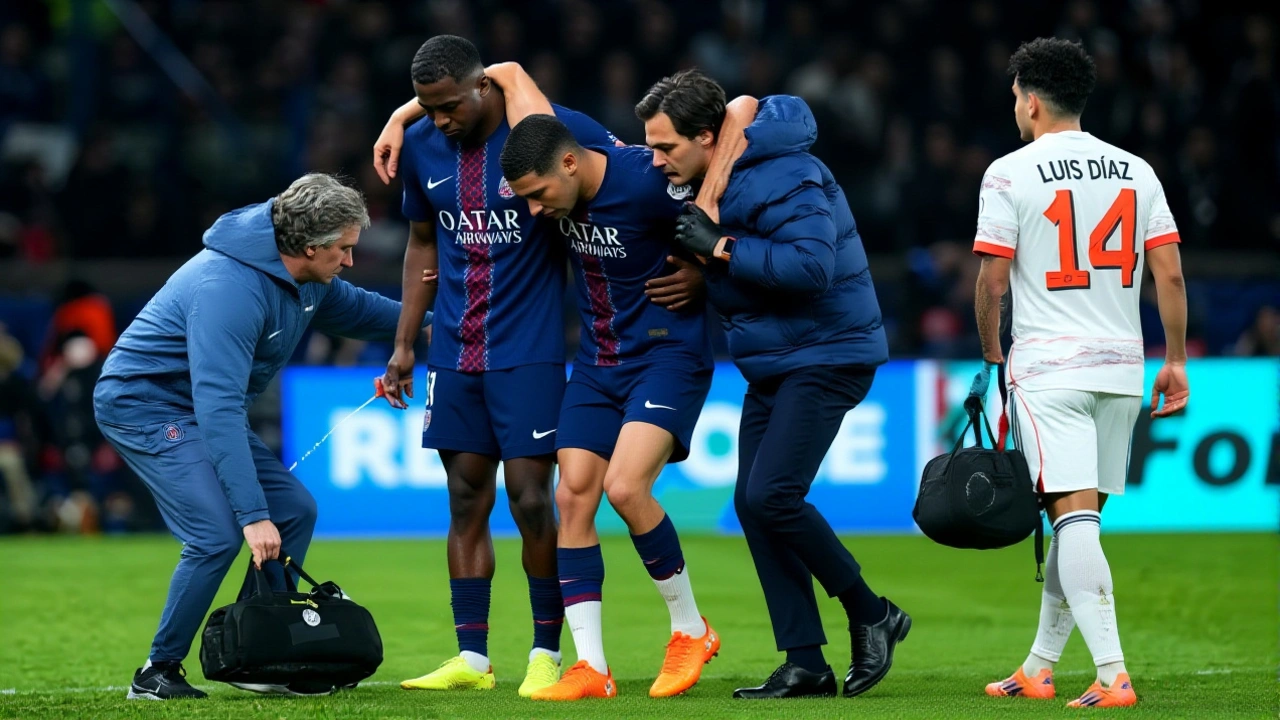
João Neves scored a 95th-minute winner as Paris Saint-Germain edged Lyon 3-2 in Ligue 1, overcoming injuries to Hakimi and Dembélé and a red card for Tagliafico to extend their league lead.
Recent-posts
Jun, 13 2024
Jan, 20 2025
Aug, 12 2024

Oct, 15 2024
Jul, 30 2024