
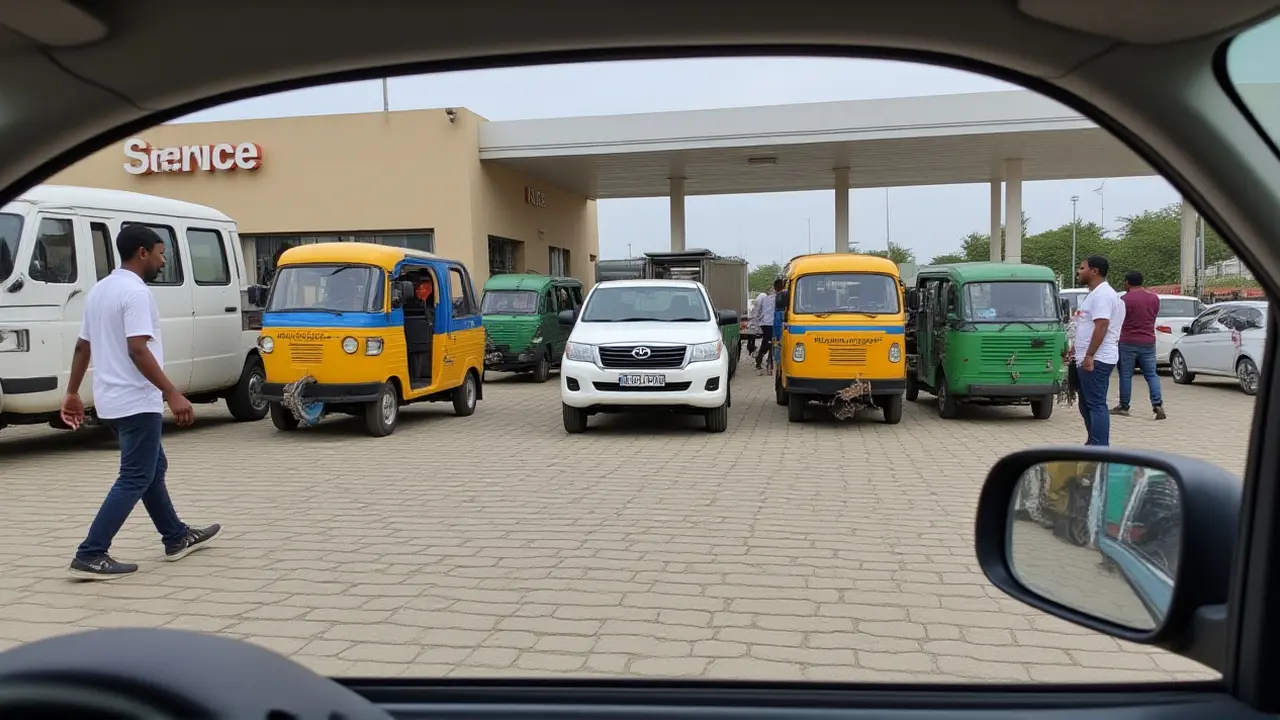
The queues at Nairobi's petrol stations are getting longer, and the tanks are running dry. For Kenyan motorists, the daily commute is turning into a logistical nightmare as independent retailers face a severe supply crunch tied to escalating tensions overseas. Approximately 20% of the country's roughly 3,100 independent fuel dealers have already gone dark, unable to source stock.
Martin Chomba, chairman of the Petroleum Outlets Association of Kenya (POAK), warned that the situation could spiral into a total crisis within two weeks if diplomatic channels remain silent. He told Reuters the supply constraint was real and immediate. "We have constrained supply," he said, highlighting the precarious balance of a nation dependent on imports for its entire energy needs.
The Supply Chain Bottleneck
Here's the thing about Kenya's fuel economy: it doesn't produce a single drop domestically. Every litre of diesel and petrol arriving onshore comes through government-facilitated deals with Gulf producers. That pipeline runs directly through the Strait of Hormuz, the narrow choke point where global trade flows are currently jammed.
The disruption stems from the Israel-Iran conflictMiddle East, which ignited on February 28, 2026. Since then, shipping routes have been compromised, blocking about 20% of global oil and liquefied natural gas shipments. While global markets feel the ripple, smaller importers like Kenya are taking the full force of the wave.
This isn't just a theoretical problem anymore. A spot check by The Star newspaper on March 23, 2026, documented long lines at the few stations still holding inventory. The visual evidence contradicts official optimism. Drivers waiting hours for a top-up are beginning to feel the anxiety of uncertainty seeping into their daily budgets. When supplies tighten, prices naturally want to jump, but the local regulator has stepped in to cap that volatility.
Regulatory Response Meets Market Reality
On March 14, 2026, the Energy and Petroleum Regulatory Authority (EPRA) froze petroleum product prices for 30 days despite seeing international crude costs spike. Daniel Kiptoo Bargoria, the Director General of EPRA, dismissed concerns about sufficiency, stating there were currently adequate stocks. A formal statement was promised to follow shortly after.
But wait, here's the friction point. By capping the pump price while global costs rise, regulators have inadvertently created a market distortion. Dealers, sensing future hikes, are reportedly beginning to hold onto their stock rather than sell it at the artificially low rate. It's classic hoarding behavior driven by anticipation. When profit margins shrink or vanish because of price freezes, merchants protect their capital by withholding goods.
This policy has left many independent operators in a bind. They want to pass on the cost increase to consumers, but EPRA regulations prohibit it for now. The result? Uneven distribution. Some areas get fuel, others don't. The POAK has been pushing authorities hard to allow marketers access to private suppliers as a backup to government channels. Without that flexibility, the warning from Chomba remains: "The real shock is on the way."
A Continent Under Pressure
This isn't an isolated incident limited to Kenya. The supply shock is rippling across Africa and Asia, exposing shared vulnerabilities in global logistics. Neighboring Ethiopia is urging citizens to reduce consumption as their own tightening supply mirrors the Kenyan struggle.
Further east, the situation looks even graver. In Sri Lanka, where petroleum accounts for a quarter of total imports, the government has introduced rationing and cut public events. Schools have shifted to a four-day week to conserve fuel. Meanwhile, Pakistan saw grocery and fuel prices surge overnight, with work-from-home policies becoming a necessary adjustment for the workforce.
Perhaps the most concerning impact is in Myanmar, where acute shortages are disrupting transport and humanitarian operations. Gwyn Lewis, the UN Resident and Humanitarian Coordinator ad interim for Myanmar, noted the double blow. "These disruptions are adding new strain to an economy in Myanmar that was already under pressure," Lewis stated. Families' purchasing power is falling as essential goods become harder to find.
What Comes Next?
Global oil prices have already risen approximately 4%, and analysts suggest more volatility is coming if the Strait of Hormuz remains unstable. For Kenya, the next two weeks are critical. If the tension in the Middle East persists beyond the forecast window, the "total crisis" predicted by POAK becomes a certainty.
Consumers can expect panic buying to worsen. As retailers anticipate higher prices next month, they may prioritize bulk clients over individual buyers. The path forward requires opening up the supply chain to private sector solutions or finding alternative logistics routes. Until then, drivers should plan for delays. The era of easy refueling is paused.
Frequently Asked Questions
Why are fuel shortages happening in Kenya now?
The shortage stems from the Israel-Iran conflict starting in late February 2026, which disrupted shipping through the Strait of Hormuz. Since Kenya imports all its fuel via these routes, any blockade directly halts domestic supply, leaving independent retailers empty.
Will fuel prices increase soon?
EPRA has frozen pump prices until mid-April 2026. However, once that 30-day period expires, experts expect significant hikes due to rising international crude costs. Many dealers are hoarding stock expecting these changes.
How many fuel stations are affected?
Approximately 20% of the country's 3,100 independent fuel dealers are currently unable to stock inventory. POAK warns this figure could rise rapidly if Middle East tensions do not de-escalate within two weeks.
Is this crisis affecting other countries?
Yes, nations including Pakistan, Sri Lanka, Myanmar, and Ethiopia are facing similar shortages. These countries have implemented rationing measures, reduced school weeks, and scaled back public sector operations to manage dwindling supplies.






Bryan Kam
March 26, 2026 AT 19:26This price cap policy is the dumbest move ever made by anyone involved.
Jane Roams Free
March 27, 2026 AT 04:53I understand the frustration people are feeling right now with the gas lines getting so long every single day.
It really puts a lot of pressure on families who budget carefully for their monthly expenses.
We need to support each other during these hard times because uncertainty is scary for everyone.
Solidarity is the best tool we have when infrastructure starts failing us unexpectedly.
Hopefully things will settle down soon so commuters can get back to normal routines.
Vikram S
March 28, 2026 AT 08:59The current strategy being employed by regulators is fundamentally flawed in its execution and logic! These price freezes create market distortions that lead directly to supply gaps! Independent dealers are not selling stock because they anticipate massive losses! Profit margins vanish when costs rise but prices stay flat! Basic economics dictates that supply will contract under these conditions! History shows us that artificial controls fail spectacularly in global markets! We see this pattern repeated everywhere whenever governments intervene heavily! The Strait of Hormuz is a choke point that nobody wants to block intentionally! Yet tensions there dictate our energy security today! Dependency on foreign routes makes us vulnerable to geopolitical shifts constantly! We must invest in local alternatives sooner rather than later! Subsidies cannot fix broken logistics networks indefinitely! People panic buy when shelves look empty at stations! The cycle repeats until trust is completely eroded! Leadership needs to step up with clear communication plans! We cannot keep waiting for diplomacy to sort out our basic fuel needs!
Cheri Gray
March 30, 2026 AT 03:22Its sad to hear this news about Kenya having such trouble fules wise
People are struggling everyday and prices are still going up high
Hopely the government fixes it real soon for evryone
Sandeep YADUVANSHI
March 31, 2026 AT 03:38One wonders why the general populace expects magic solutions from bureaucratic entities designed for stagnation.
Efficiency was never part of the mandate for these regulatory bodies anyway.
We observe the decay of systems quite clearly when we look past the press releases.
dinesh baswe
April 1, 2026 AT 08:59Data indicates that twenty percent of independent retailers have stopped operations entirely.
This suggests a severe bottleneck in the distribution network rather than just a demand spike.
Historical precedents show that private sector flexibility usually resolves issues faster than state mandates.
Opening channels for private suppliers could alleviate the immediate strain on urban centers.
Monitoring inventory levels remains the most critical metric for recovery planning.
Rahul Sharma
April 3, 2026 AT 00:29The situation regarding import dependency is quite serious indeed.
We must acknowledge that no nation produces all its energy domestically nowadays.
However the strategic reserve capacity appears insufficient for prolonged disruptions.
Diplomatic efforts are underway but trade routes remain volatile currently.
It seems prudent to plan for rationing measures in the near future.
Boobalan Govindaraj
April 3, 2026 AT 06:06i think we should all try carpooling more often and stop driving alone if we can help it
maybe that way we save fuel for the ones who really need to travel far
lets hope the leaders find a good solution before summer ends
Ayushi Kaushik
April 4, 2026 AT 03:32The landscape of commerce is shifting like sand dunes in a sudden storm.
Fuel tanks run dry like rivers in a drought season.
Patience wears thin as engines sit silent on empty lots.
We stand together in this shared vulnerability of modern logistics.
Hope shines through even when shadows lengthen across the horizon.
Krishnendu Nath
April 5, 2026 AT 03:28Man this is crazy how fast things are moving!!
Stations are closing left and right and prices are flying everywhere!!
We need to fix the roads and the trade deals ASAP!!!
Everyone is talking about this stuff nonstop right now!!!
Let's stay safe and save power wherever we can!!!!
Aman kumar singh
April 5, 2026 AT 12:25There is a path forward if we adjust our expectations quickly enough.
Reducing consumption now buys us time for better deals later.
Businesses that pivot early will survive this volatility best.
Community support networks are becoming the backbone of survival here.
We will get through this if we act smart.
Senthil Kumar
April 7, 2026 AT 01:34totally agree with u that we need to shift gears now
cant rely on imports forever so lets find local ways
keep pushing for change and stay strong fams
nithin shetty
April 7, 2026 AT 13:42The economic implications are significant and require careful analysis beyond headlines.
Supply chain diversification is the only sustainable long term solution.
Regional cooperation could mitigate risks associated with single route dependence.
We need to document these failures to prevent recurrence later.
Knowledge sharing among affected nations will help build resilience.