
Tomato Prices: What’s Driving the Cost Across Africa?
When you buy a kilo of tomato prices, the cost of fresh tomatoes in local markets influenced by farming conditions, transport, and energy expenses. Also known as fresh produce pricing, it’s one of the most visible signs of food inflation affecting households from Cape Town to Nairobi. It’s not just about bad weather—it’s about broken supply chains, rising diesel costs, and power cuts that kill harvests before they even reach the market.
Take South Africa, a country where loadshedding disrupts irrigation, cold storage, and transport for perishable goods. Farmers in the Berg River Valley, for example, are turning to solar-powered pumps and battery backups just to keep their tomato crops alive. Meanwhile, in Kenya, a nation where electricity shortages and fuel price hikes hit smallholder farmers hardest, tomato prices have jumped over 60% in the last year. The same thing’s happening in Nigeria, Ghana, and Tanzania. It’s not coincidence—it’s systemic. When Eskom cuts power, refrigerated trucks stall. When diesel spikes, tomatoes rot on the side of the road. And when rains fail or floods wash away fields, the price tag shows up at your local spaza shop.
What’s surprising isn’t that prices are up—it’s that no one’s fixing the root causes. Governments talk about subsidies, but subsidies don’t fix broken roads or dead batteries. Real solutions? Reliable power for farms, better cold-chain logistics, and local processing to turn surplus into paste or sauce before it spoils. Right now, the market is screaming for smarter systems. And the data is clear: if you’re paying more for tomatoes, it’s not because they’re rarer—it’s because the system holding them up is failing.
Below, you’ll find real reports from across the continent showing how tomato prices are tied to energy policy, transport failures, and climate shocks. No fluff. Just facts from the fields, the trucks, and the stalls where people actually buy their food.
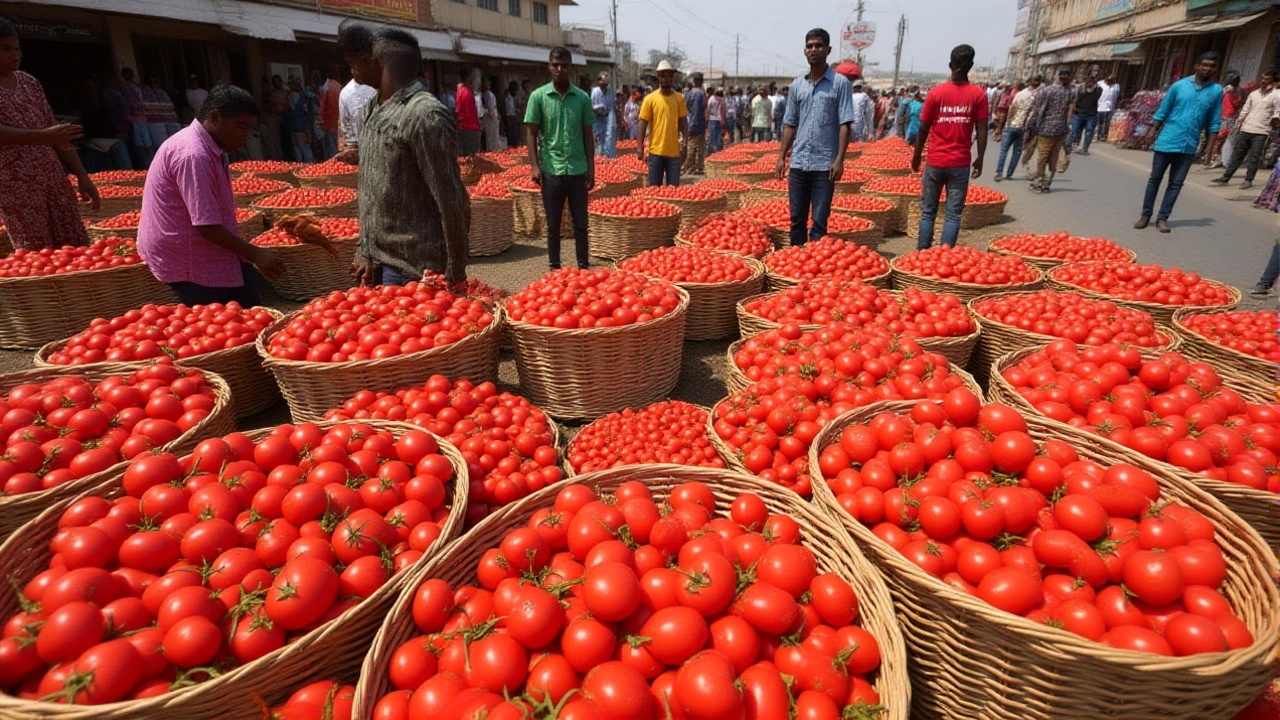
Tomato prices in Nigeria dropped 22% in June 2019 as high rice tariffs disrupted supply chains, hurting farmers and vendors despite lower consumer costs. The National Bureau of Statistics confirmed the trend amid broader food market instability.
Recent-posts

Mar, 26 2026

Dec, 7 2024

Aug, 18 2025

Jul, 19 2024

Oct, 31 2025